Short answer
Ice dams start inside the house. Warm air leaks up into the attic, warms the roof deck, and melts the snow above it. The water runs down to the cold eaves and refreezes into a ridge of ice that backs water under the shingles. The Minnesota Department of Commerce puts it bluntly: "The primary cause of ice dams is attic air leaks." The permanent fix is to seal those leaks first, then insulate, with ventilation playing a supporting role.
How an ice dam forms
An ice dam needs three things: snow on the roof, a roof deck that is warm enough to melt it, and eaves that stay below freezing. In a Minnesota winter, the first and third are guaranteed. The second is the part you control.
- Heat from the house reaches the attic, mostly as warm air leaking through gaps in the ceiling, plus some heat moving through thin insulation.
- The attic and the roof deck above it warm up above freezing, even when it is well below freezing outside.
- Snow on the warm part of the roof melts from underneath, and the water runs down the roof.
- When it reaches the eaves, which hang out past the warm house and stay cold, it refreezes.
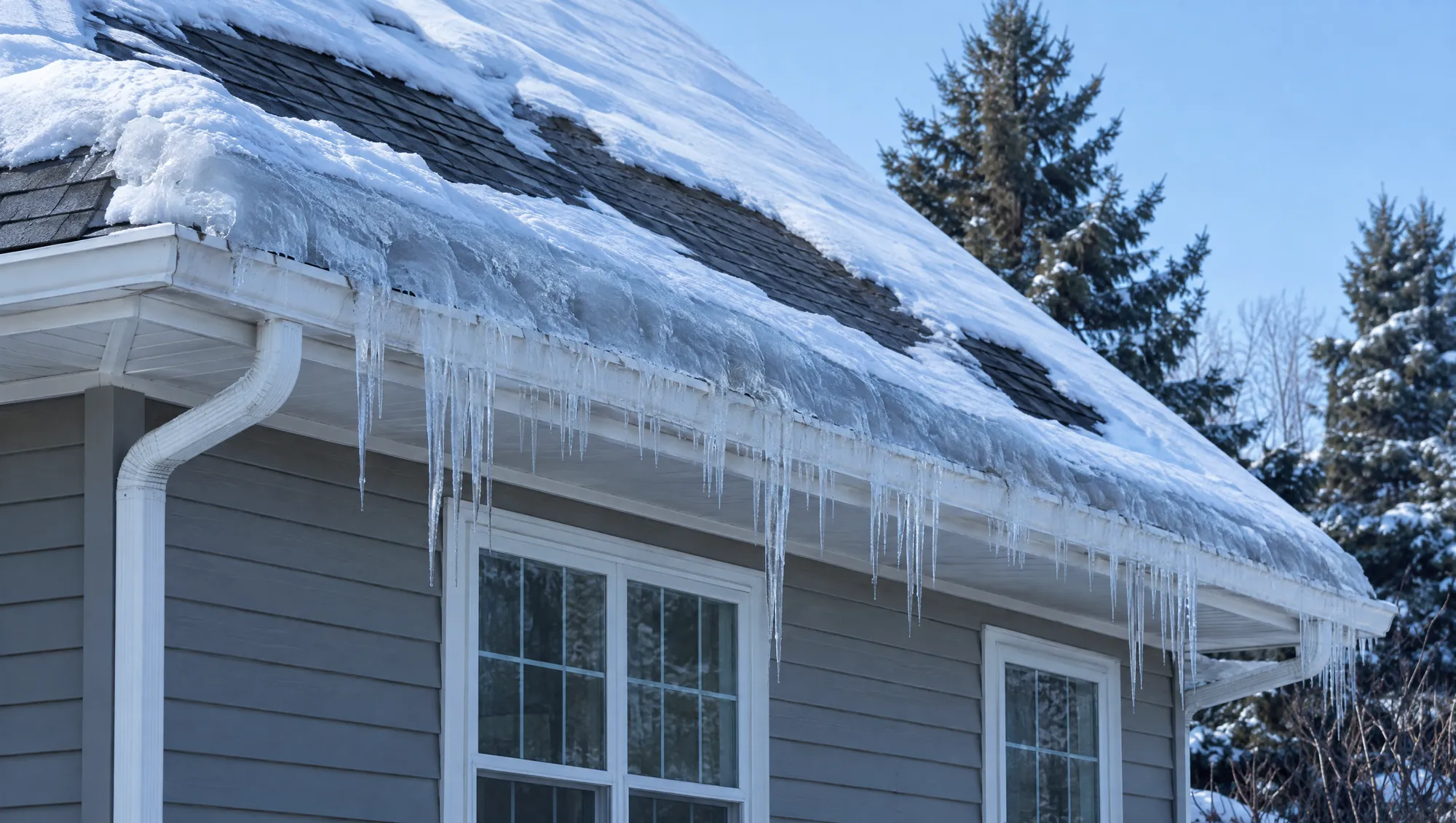
- Day after day the ice builds into a dam. Meltwater pools behind it and works its way under the shingles, into the wall and the ceiling below.
Those bare, melted patches higher up the roof while the eaves are covered in ice are a sign of exactly this: heat escaping in those spots.
Why air leaks matter more than you'd think
Most people assume an ice dam means the attic needs more insulation. That is part of it, but it is usually not the biggest part.
University of Minnesota Extension notes that the heat melting the snow "primarily comes from the house," and that air leakage is "in many homes" the major way heat gets into the attic (UMN Extension). Warm air rises, finds every gap in the top-floor ceiling, and carries both heat and moisture into the attic.
Most insulation slows heat moving through it, but does very little to stop moving air. Blowing more insulation on top of a leaky ceiling hides the leaks without sealing them. The Department of Commerce says insulation alone is insufficient (Home Energy Guide).
Where attic air leaks hide
The leaks are almost always under the existing insulation, which is why they go unnoticed. The Commerce Home Energy Guide's list of common attic bypasses:
- Attic hatches and kneewall doors
- Gaps around wires, plumbing pipes and vent stacks, and ducts
- The tops of interior walls (top plates)
- Recessed lights and bathroom exhaust fans
- Gaps around chimneys and flues, which must be sealed with metal and fire-rated caulk
- Kneewall drawers and wiring holes at the tops of walls
The permanent fix, in the right order
1. Seal the attic floor
Extension's first instruction is to "make the ceiling air tight." That means pulling back insulation where needed and sealing every bypass with foam, caulk, sheet material or, around chimneys, metal and fire-rated sealant. Insulation installed over a sealed ceiling performs far better than the same insulation over a leaky one.
2. Insulate to full depth
Minnesota's energy code requires R-49 in the ceilings of new homes, and Commerce recommends insulating to at least R-50 when you fix an ice dam problem. In an existing attic that usually means blown-in fiberglass or cellulose, roughly 14 to 20 inches deep depending on the material, installed to the manufacturer's coverage chart.
3. Keep the ventilation working
Ventilation helps carry away any heat and moisture that still gets into the attic, but it is the last step, not the first. The building code calls for a set amount of vent area based on the attic floor, split between low intake at the soffits and high exhaust near the ridge, and at least a 1-inch air space between the insulation and the roof sheathing at the vents (2020 Minnesota Residential Code, R806). Rafter baffles hold that channel open so the insulation can go full depth without blocking the soffits.
If you have an ice dam right now
The permanent fix happens in the attic, but an active ice dam needs attention before water gets inside:
- Hire a steamer. For an active ice dam, Commerce recommends a professional ice dam removal service that uses steamers.
- Rake carefully, or not at all. Pulling snow off the lower roof with a roof rake can reduce the meltwater feeding the dam, but Extension warns that rakes and brooms can damage roofing, and Commerce suggests hiring a pro may be best.
- Don't chip, salt or torch it. Commerce warns that removing ice with chippers, chemicals or heat can damage shingles and gutters.
- Skip the heat cable. Commerce says installing heating cables will shorten the life of your roof.
- In a pinch, Extension describes channeling the dam with tap water on a warmer day to let trapped water drain.
Then put the attic on your list for the off-season, or do it now. Attic air sealing and insulation can be done in winter, and ice dams make the problem spots easy to find.
Rebates that help pay for it
Minnesota's big utilities pay toward attic air sealing and insulation in existing homes, but only through approved contractors:
| Rebate | Xcel Energy (MN) | CenterPoint Energy (MN) |
|---|---|---|
| Air sealing | 40% of cost, up to $600 | $750 for attic air sealing |
| Attic insulation | 40% up to $1,200, from R-19 or less to R-49 or more | $1,300 with air sealing, from R-30 or less to R-49 or more |
| Key requirements | Participating contractor; air sealing must cut leakage at least 15%; insulation rebates require air sealing | Rebate-eligible installer with BPI-certified crew leads; blower door tests before and after; insulation alone doesn't qualify |
Details change, so confirm current amounts on the Xcel Energy and CenterPoint Energy rebate pages, and ask any contractor whether they are on the utility's approved list before you sign. Rebates generally apply to existing homes, not new construction.
The federal Energy Efficient Home Improvement Credit (25C) is no longer an option for new work. It ended for property placed in service after December 31, 2025 (IRS).
Sources
- University of Minnesota Extension, Dealing with and preventing ice dams
- Minnesota Department of Commerce, Home Energy Guide (2025)
- Minnesota Rules chapter 1322 (Residential Energy Code) and the 2020 Minnesota Residential Code, section R806
- Xcel Energy, Insulation and air sealing rebates
- CenterPoint Energy, Air sealing and insulation rebates
- Internal Revenue Service, One Big Beautiful Bill provisions
Have a project in mind?
Matt and Joe will look at it in person and give you a written estimate with the foam type, depth and R-value for every area.