
LSI Lake State Insulation home

Blown-in insulation

Blown-in attic insulation to R-49 & beyond

Blown-in insulation is loose-fill fiberglass or cellulose blown through a hose into an even, deep layer, and it is the most cost-effective way to reach R-49 or more in an attic. We install it in new-home attics after drywall and top up existing attics across Isanti and the north metro.

  • Fiberglass or cellulose
  • Blown to R-49 or more
  • Depth markers for you and your inspector
  • Baffles and air sealing done first
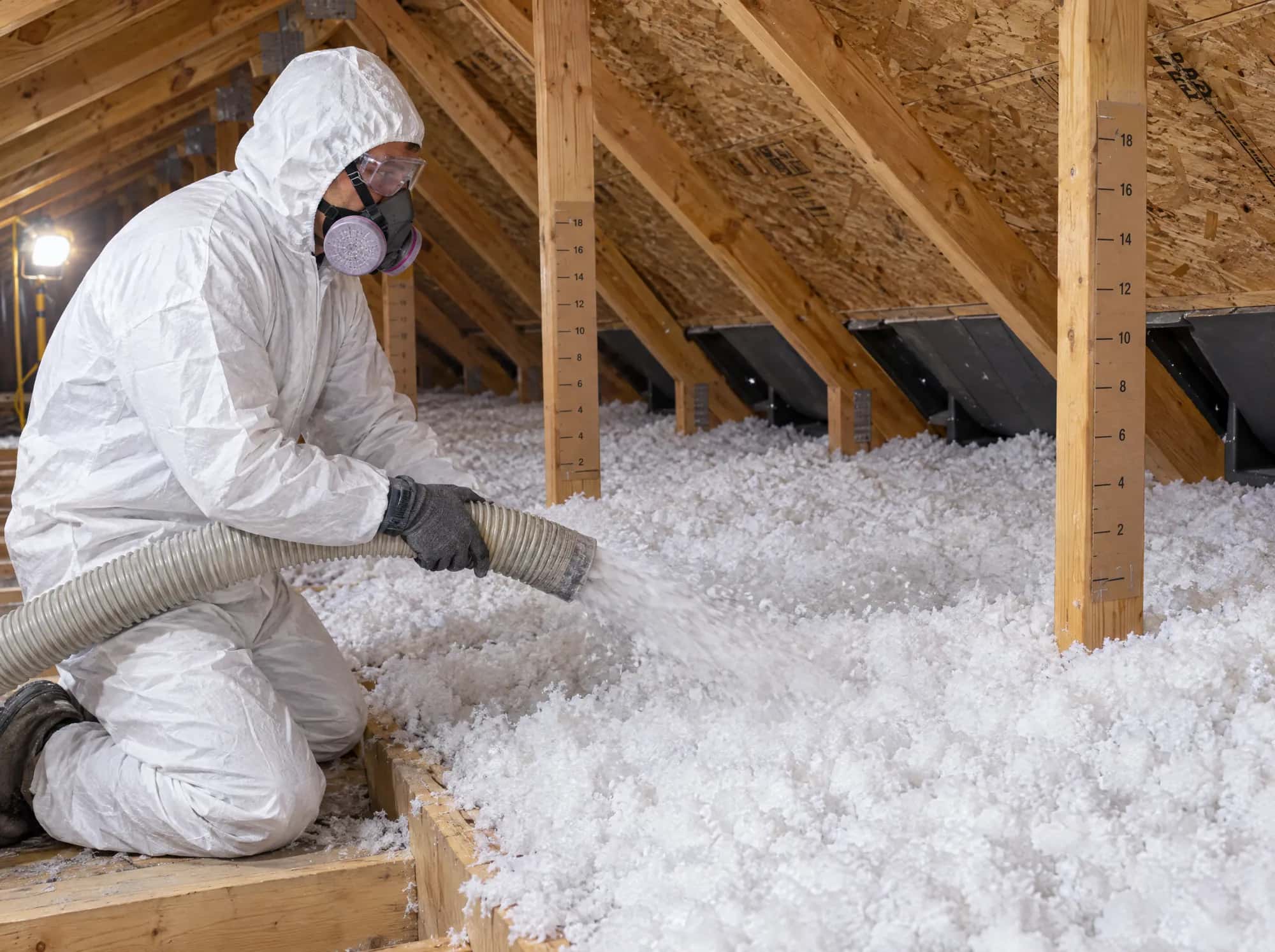
Installer blowing loose-fill insulation into an attic, with depth rulers on the trusses

Fiberglass or cellulose?

Both work well when they are installed to the right depth. Loose-fill fiberglass is light, doesn't absorb moisture and settles very little. Cellulose is made from recycled paper treated with a borate fire retardant; it is denser, slows air movement better than fiberglass, and is the material we use to dense-pack existing walls.

We'll recommend one based on your attic, your budget and what is already up there.
How deep does it need to be?

Minnesota's energy code calls for R-49 in the ceilings of new homes. Depending on the product, that takes roughly 14 to 20 inches of loose-fill. We install to the manufacturer's coverage chart, which lists both the depth and the number of bags per square foot, so the R-value is real and not just a guess at the depth.

The energy code also requires depth markers in blown attics, at least one for every 300 square feet, facing the attic access. They let you and your building inspector confirm the depth at a glance.

Done right at the eaves

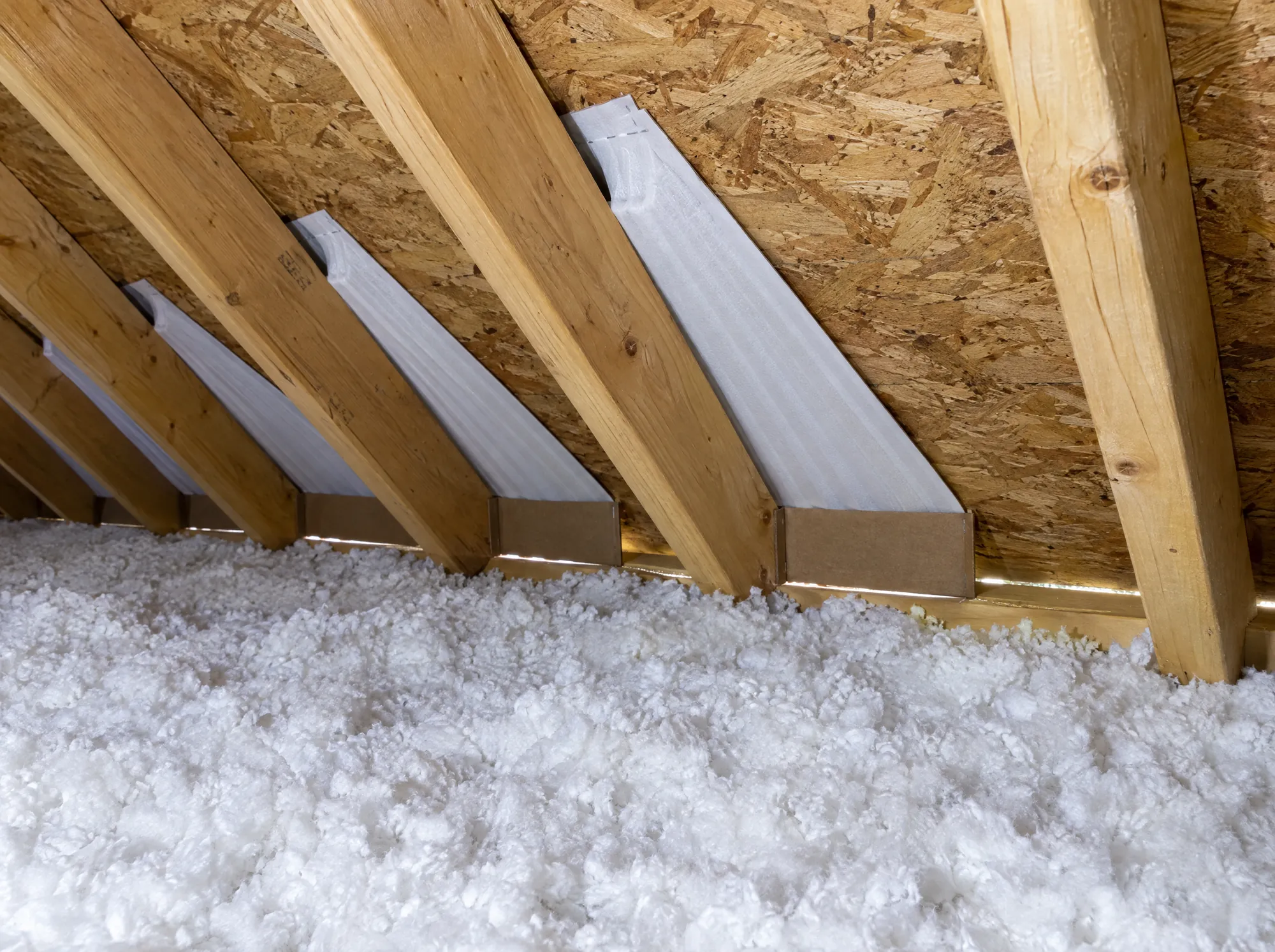
The edges of the attic are where most blown-in jobs go wrong. Insulation blown into the soffits blocks the intake vents and starves the attic of airflow. Before we blow, we install rafter baffles that hold open at least an inch of air space above the insulation, plus wind wash dams at the top plate so the insulation can go full depth right to the outside wall.

Rafter vent baffles and cardboard wind dams at the eave with blown-in insulation up to them

New homes and existing homes

Blown-in insulation fits most attics, old and new:

  • New construction attics, after drywall and the insulation inspection schedule
  • Topping up thin or settled insulation in existing homes
  • Reinsulating after old insulation has been removed
  • Attics over additions and finished garages

FAQ

Blown-in insulation questions

How long does it take to blow in attic insulation?

Most attics are done in a few hours to a day, depending on size, access and how much air sealing and baffle work comes first.

Does blown-in insulation settle?

Cellulose settles somewhat after installation and fiberglass very little. The manufacturer's coverage chart accounts for settling, which is why we install to the chart's depth and bag count rather than just eyeballing it.

Can you blow new insulation on top of the old?

Usually, yes, as long as the existing insulation is dry and clean. If it is wet, moldy, smoke-damaged or contaminated by rodents, it should be removed first.

Tell us about your project

Building a barndo, a custom home or a shop? Reach out and we'll set up a time to see it. No pressure, no guesswork pricing.