
LSI Lake State Insulation home

Wall & sidewall insulation

Wall insulation for new & existing homes

We insulate walls two ways. In new construction we use spray foam, flash-and-batt or batts before the drywall goes up. In existing homes we dense-pack cellulose into the wall cavities through small holes, so the walls get insulated without tearing out drywall.

  • New construction walls to code
  • Dense-pack cellulose for existing walls
  • No drywall tear-out
  • Spray foam, hybrid or batts
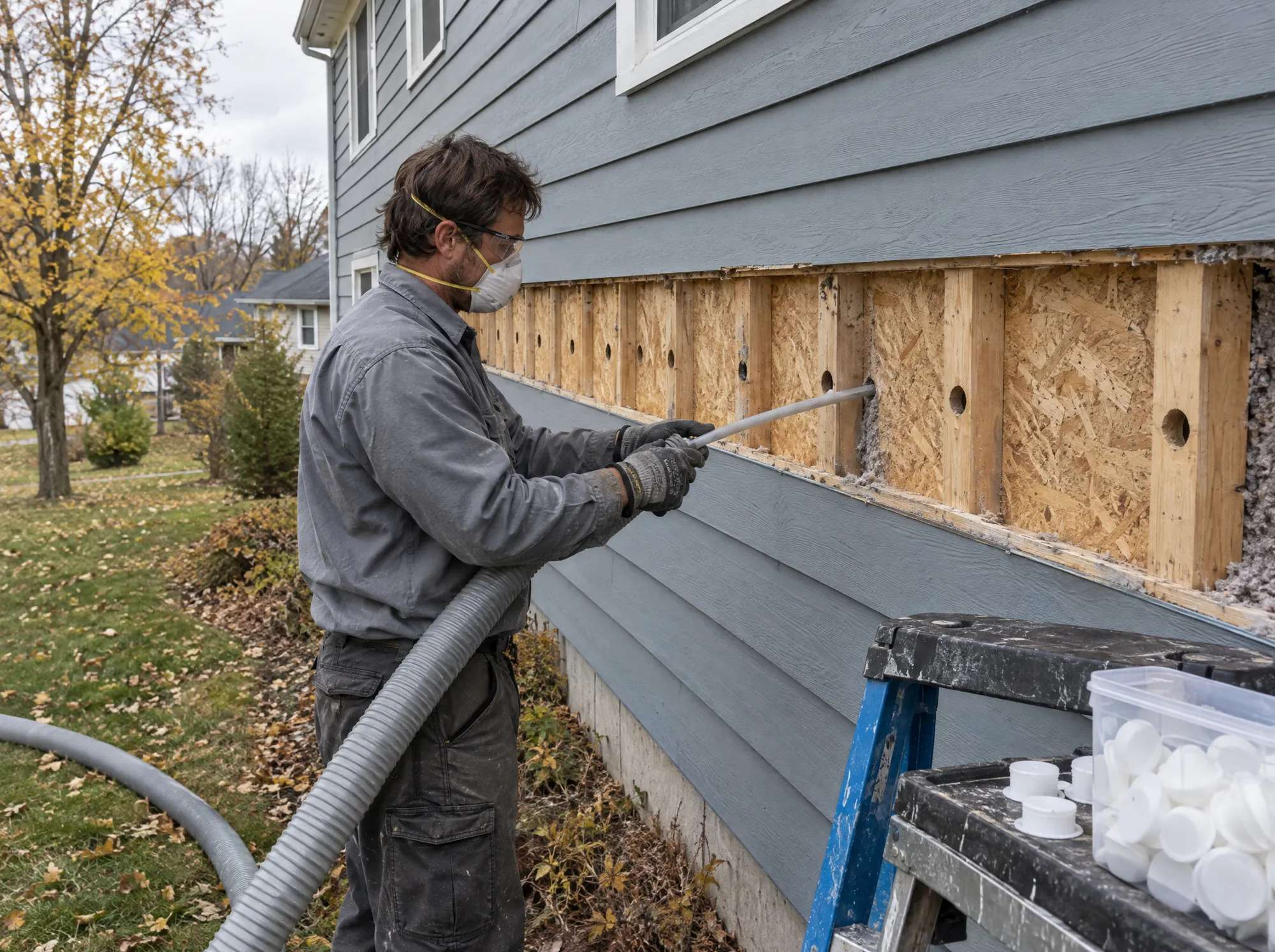
Installer dense-packing cellulose into a house wall through drilled holes behind removed siding

New construction walls

In most of our service area (Climate Zone 6), Minnesota's energy code requires R-20 in a wood-framed wall, or R-13 in the cavity plus R-5 of continuous insulation. Pine County sits in Zone 7, which has its own requirements.

We meet those numbers with closed-cell foam, open-cell foam with a vapor retarder, flash-and-batt hybrid walls, or batts, depending on your budget, framing and airtightness goals. We'll lay out the options side by side in your estimate.
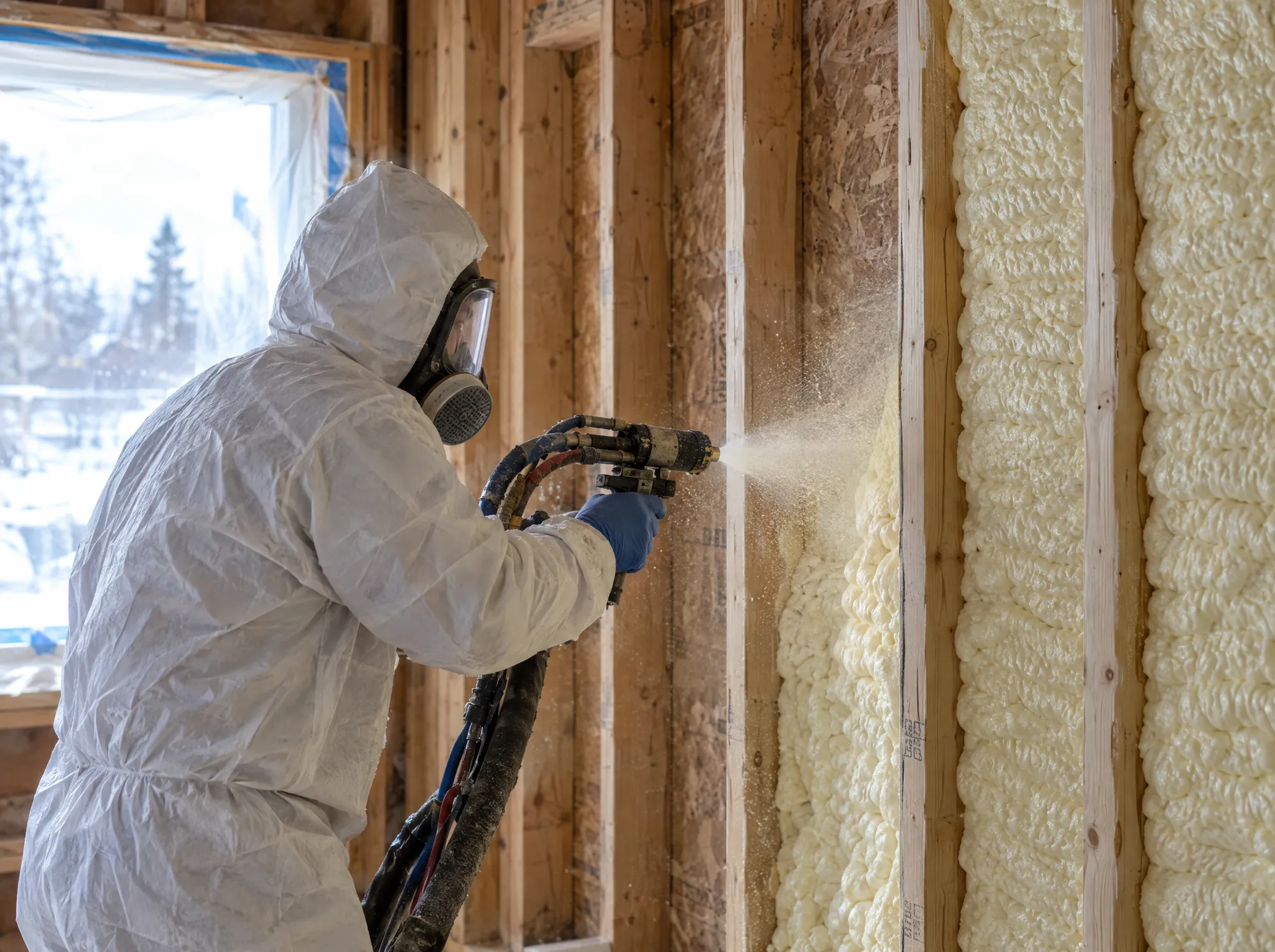
Closed-cell spray foam being applied to new 2x6 exterior walls

Existing walls: dense-pack sidewall insulation

Many older Minnesota homes have walls that are empty or only partly filled. Dense-pack insulation fixes that without opening the walls. We remove a course of siding (or work from inside), drill a hole into each stud bay, and blow cellulose in through a fill tube at high density so it packs every corner and won't settle.

Then the holes are plugged, the siding goes back on, and the walls stay finished. Dense-packed cellulose also slows air moving through the walls, so the house feels less drafty, not just warmer.

Is your house a good candidate?

Dense-pack sidewall insulation works best when:

  • Exterior walls are empty or only partly insulated
  • Rooms along outside walls feel cold or drafty in winter
  • You're residing and want to insulate while the walls are open
  • A remodel turned up uninsulated walls

Before we insulate existing walls

Old knob-and-tube wiring must not be buried in insulation, so it has to be replaced or cleared by an electrician first. We also check for moisture problems and plan around the exterior siding before anything is drilled.

FAQ

Wall & sidewall insulation questions

Can you insulate walls without removing drywall?

Yes. Dense-pack cellulose goes in through small holes drilled into each stud bay, usually from the outside behind a removed course of siding. The holes are plugged and the siding goes back on, so the interior walls stay untouched.

How do I know if my walls are empty?

With the power off, remove an outlet cover on an exterior wall and look beside the box, or check through a small hole in a closet. On a cold day, a thermal camera shows uninsulated bays clearly. We'll check during the site visit.

Will dense-pack insulation settle in the walls?

Not when it is installed at the right density. Dense-packing fills the cavity tightly enough that the cellulose holds its place instead of slumping like loosely blown insulation.

Tell us about your project

Building a barndo, a custom home or a shop? Reach out and we'll set up a time to see it. No pressure, no guesswork pricing.